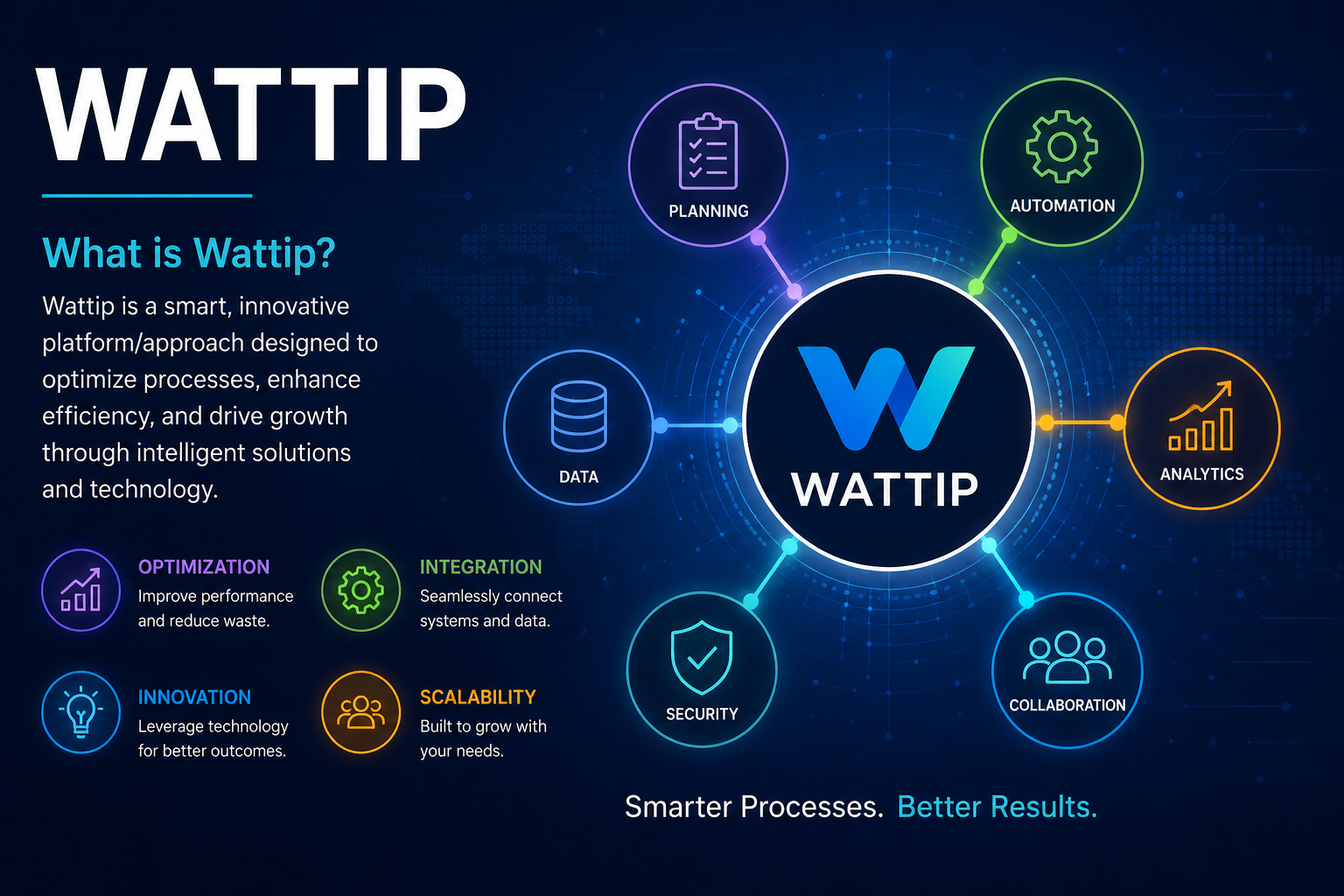
When people first encounter the question What is Wattip?, they often expect a simple definition, but the concept is more layered and meaningful than a single sentence explanation. What is Wattip? can be understood as a modern conceptual framework that reflects how systems, processes, and ideas interact in structured and efficient ways. It is commonly associated with optimization thinking, integration strategies, and adaptive system design in environments where complexity is constantly increasing.
In today’s digital-first world, organizations and individuals are constantly trying to improve performance while managing growing complexity. This is where understanding becomes useful, because it represents a way of thinking that prioritizes clarity, connection, and continuous improvement. Instead of treating systems as isolated components, Wattip encourages a more unified perspective where every part contributes to a larger, more efficient whole.
The importance of What is Wattip? also lies in its flexibility. It is not restricted to one industry or one type of application. Instead, it can be applied across technology, business operations, communication systems, and data management structures. This adaptability makes it a valuable concept for anyone looking to understand modern system design principles in a practical and meaningful way.
Understanding What is Wattip? and Its Core Meaning
To truly understand What is Wattip?, it is important to move beyond surface-level interpretation and explore its underlying principles. At its core, Wattip is best described as a structured approach to improving how different elements within a system interact, communicate, and evolve together. It emphasizes efficiency, coherence, and adaptability as key drivers of performance.
When asking What is Wattip?, one of the most important ideas to recognize is that it focuses on relationships rather than isolated components. In traditional systems, each part may function independently, but Wattip encourages interdependence. This means that improvements in one area should support and enhance the performance of other areas, creating a balanced and well-coordinated structure.
Another essential aspect of is its emphasis on continuous improvement. Systems built or analyzed through a Wattip perspective are never considered complete or final. Instead, they are designed to evolve over time, adapting to new requirements, technologies, and challenges without losing stability or structure.
In simple terms, What is Wattip? can be seen as a way of thinking that combines structure with flexibility. It allows systems to remain organized while still being open to change and improvement, which is essential in modern environments where static models quickly become outdated.
The Conceptual Evolution Behind What is Wattip?
The question What is Wattip? also leads us into its conceptual evolution, which is rooted in the broader development of systems thinking and modern optimization strategies. Over time, industries have shifted from rigid, linear processes toward more dynamic and interconnected frameworks. Wattip is a reflection of this shift.
In earlier systems, processes were often designed in isolation, with little consideration for how different components interacted. This created inefficiencies and made scaling difficult. As technology advanced, it became clear that interconnected systems were more effective, leading to the development of integrated design principles that influenced what we now understand as Wattip.
As a result, represents a more mature stage in system design thinking. It takes into account not only performance but also adaptability and long-term sustainability. This evolution reflects a growing understanding that systems must be flexible enough to respond to change while remaining structured enough to maintain stability.
Today, when people explore What is Wattip?, they are essentially engaging with a modern approach to complexity management. It is a concept shaped by years of technological advancement and practical experience in designing systems that must operate in constantly changing environments.
Core Principles That Define What is Wattip?
To fully grasp What is Wattip?, it is essential to understand the core principles that define it. These principles act as guiding foundations that shape how Wattip is applied across different contexts.
One of the most important principles behind What is Wattip? is integration. This means that all parts of a system should be connected in a meaningful way, allowing information and processes to flow smoothly without unnecessary barriers. Integration ensures that systems function as a unified whole rather than disconnected segments.
Another key principle is efficiency. When exploring , efficiency refers to the removal of unnecessary complexity and the optimization of processes so that they deliver maximum output with minimal waste. This principle ensures that systems remain lean, effective, and responsive.
Adaptability is also central to What is Wattip?. Systems are expected to evolve over time, adjusting to new conditions without requiring complete redesigns. This makes Wattip particularly relevant in environments where change is constant and unavoidable.
Scalability plays a major role as well. Understanding What is Wattip? includes recognizing that systems must be able to grow without losing performance or structure. Whether dealing with increased users, data, or operational demands, scalability ensures long-term viability.
Finally, clarity is a defining principle of What is Wattip?. Clear structure and logical organization make systems easier to understand, manage, and improve. Without clarity, even the most advanced systems become difficult to maintain.
Practical Applications of What is Wattip? Across Industries
The real value of understanding What is Wattip? becomes evident when examining its applications across different industries. Because it is a conceptual framework rather than a rigid system, Wattip can be adapted to various fields.
In technology, What is Wattip? is often reflected in software architecture and system design practices. Developers use its principles to build modular, scalable, and efficient systems. By focusing on integration and adaptability, software becomes easier to maintain and upgrade over time.
In business operations, What is Wattip? helps organizations improve workflow efficiency. Many businesses struggle with disconnected departments and inefficient communication structures. Applying Wattip thinking allows them to create more unified processes where information flows smoothly and decisions are better coordinated.
In communication systems, What is Wattip? plays a role in ensuring clarity and reducing misunderstandings. When communication channels are structured effectively, teams can collaborate more efficiently and avoid unnecessary confusion or delays.
In data management, What is Wattip? supports the organization of large and complex datasets. As data continues to grow in volume and importance, structured approaches become essential for retrieval, analysis, and decision-making. Wattip-inspired systems help maintain order and accessibility.
In strategic planning, What is Wattip? assists organizations in aligning long-term goals with operational execution. This ensures that strategy is not only well-defined but also practically achievable through coordinated systems.
Benefits of Understanding and Applying What is Wattip?
There are several benefits associated with understanding What is Wattip? and applying its principles in real-world scenarios. One of the most significant benefits is improved efficiency. Systems designed with Wattip thinking reduce unnecessary steps and streamline operations, leading to faster and more reliable outcomes.
Another major benefit is scalability. When organizations understand What is Wattip?, they can design systems that grow naturally without requiring major restructuring. This makes expansion smoother and less disruptive.
Adaptability is also greatly enhanced. In a rapidly changing environment, the ability to adjust quickly is essential. Wattip-based systems are designed to evolve, making them more resilient in the face of change.
Better coordination is another advantage. When systems are integrated properly, communication between components becomes more effective, reducing misunderstandings and improving collaboration.
Long-term stability is also a key benefit of What is Wattip?. Systems built on these principles tend to be more sustainable, making them suitable for continuous use and long-term development.
How to Apply What is Wattip? in Real-World Scenarios
Applying What is Wattip? in practical environments requires a structured and thoughtful approach. It begins with understanding existing systems and identifying areas where inefficiencies or disconnects exist. This initial understanding is crucial because it provides the foundation for improvement.
Once the current structure is analyzed, the next step in applying What is Wattip? involves designing a more integrated system. This means rethinking how different parts interact and ensuring that processes are aligned rather than fragmented.
After designing the improved structure, implementation should be carried out gradually. A phased approach allows for adjustments and ensures that the system remains stable during transition. This is an important part of successfully applying What is Wattip? in any environment.
Finally, continuous monitoring and refinement are essential. Systems are not static, and regular evaluation ensures that they remain aligned with goals and continue to perform effectively. This ongoing process is a core part of What is Wattip? in practice.
Challenges in Understanding and Using What is Wattip?
While What is Wattip? offers many advantages, it is not without challenges. One of the main challenges is the complexity involved in restructuring existing systems. Many organizations operate with legacy structures that are deeply embedded, making transformation difficult.
Another challenge is resistance to change. People often prefer familiar systems, even if they are inefficient. Understanding What is Wattip? requires a shift in mindset, which can take time and effort to achieve.
Resource limitations can also create obstacles. Implementing Wattip-inspired changes may require investment in training, tools, and system redesign. Without proper resources, adoption can become difficult.
Maintaining balance during transition is another challenge. If changes are implemented too quickly, systems may become unstable. If changes are too slow, progress may be limited. Finding the right balance is essential when working with What is Wattip?.
Despite these challenges, the long-term benefits often make the effort worthwhile, especially for organizations dealing with complex and evolving environments.
The Future of What is Wattip? in a Digital World
The future of What is Wattip? is closely tied to the continued evolution of digital systems and intelligent technologies. As automation, artificial intelligence, and data-driven decision-making become more advanced, the need for structured yet flexible frameworks will increase.
What is Wattip? is likely to become even more relevant in environments where systems must operate autonomously while still maintaining coordination and control. Its emphasis on integration and adaptability aligns well with the needs of future technologies.
As global systems become more interconnected, will also play a role in ensuring consistency across large-scale operations. Whether in business, technology, or communication networks, its principles will help maintain order in increasingly complex environments.
The ongoing digital transformation across industries suggests that What is Wattip? will continue to evolve as a guiding concept for system design and organizational efficiency.
Conclusion
Understanding What is Wattip? is valuable because it provides a modern perspective on how systems can be designed, managed, and improved. It is not just a definition but a way of thinking that emphasizes integration, efficiency, scalability, and adaptability.
In a world where complexity continues to grow, What is Wattip? offers a structured approach to managing that complexity effectively. It encourages the creation of systems that are not only functional but also flexible and sustainable over time.
As industries continue to evolve, the relevance of What is Wattip? will only increase. Its principles provide a foundation for building smarter, more connected, and more efficient systems capable of meeting future challenges.
Ultimately, What is Wattip? represents a shift toward more intelligent and holistic thinking. It helps bridge the gap between complexity and clarity, making it an important concept for anyone interested in modern system design and optimization