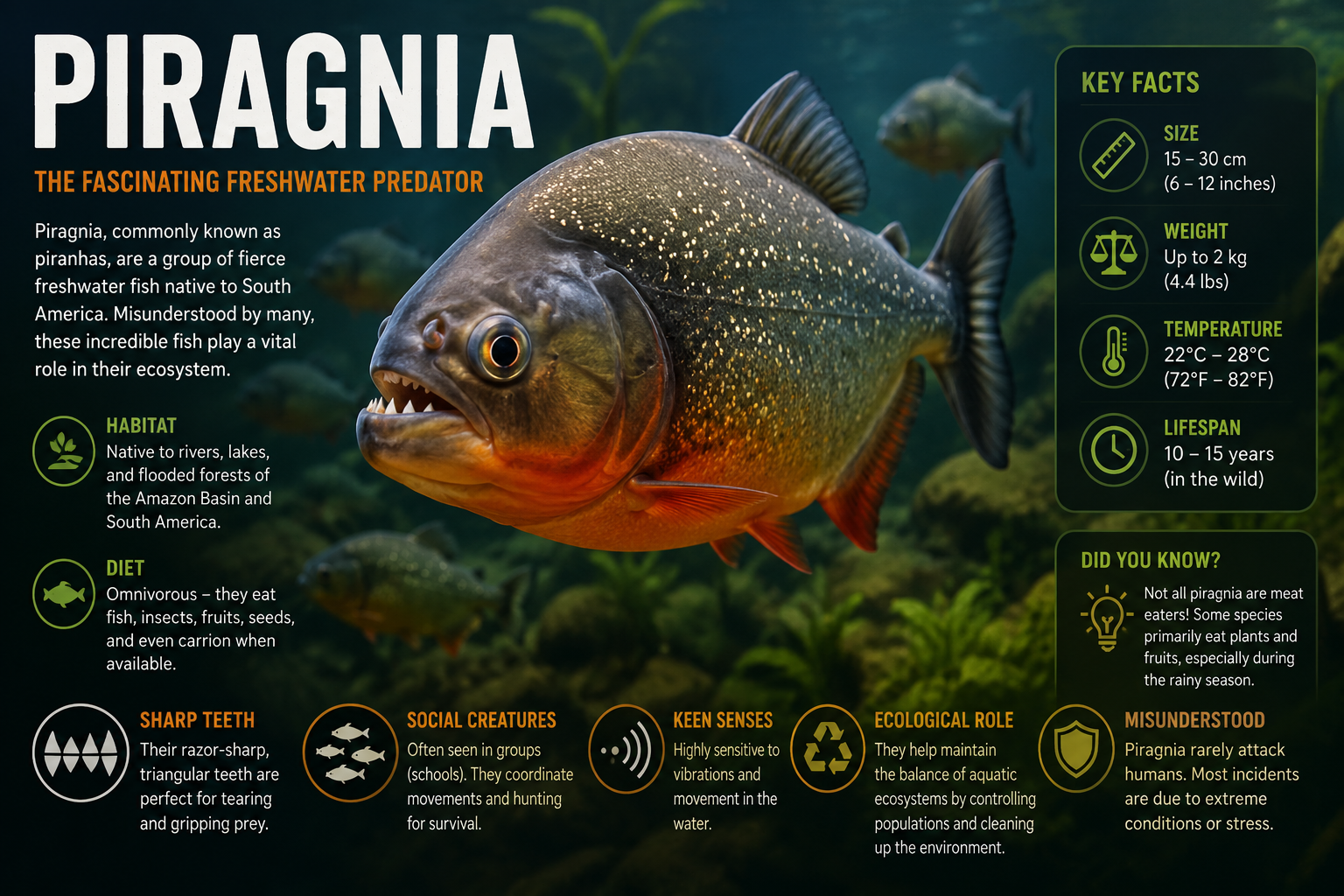
Introduction to Piragnia
The term piragnia is often associated with one of the most misunderstood creatures in freshwater ecosystems. While many people may be unfamiliar with the spelling or even the exact meaning of the word, it is commonly linked to the famous South American fish known for its sharp teeth, strong bite, and fascinating behavior. In most contexts, piragnia is used as a variation or misspelling of piranha, a group of freshwater fish that have captured human imagination for decades through documentaries, stories, and cultural references.
Despite their fearsome reputation, fish are far more complex and ecologically important than popular media often suggests. They are not mindless predators, nor are they constant threats to humans. Instead, they are highly adaptive fish that play a crucial role in maintaining the balance of aquatic ecosystems in South America. Understanding requires going beyond myths and focusing on their biology, behavior, natural habitat, and interactions with both the environment and humans.
This article explores every essential aspect of piragnia in detail. From their evolutionary background to their feeding habits, social structure, and role in aquariums, you will gain a deep and practical understanding of these fascinating fish. By the end, you will see why are not just symbols of fear but also important contributors to biodiversity and ecological stability.
Understanding the Meaning of Piragnia
The word piragnia does not officially belong to scientific classification, but it is widely used as an alternative spelling or phonetic variation of piranha. This variation often appears in casual writing, online searches, and informal discussions. Because of its similarity to the correct term, piragnia is frequently used by people who are searching for information about these fish but are unsure about spelling accuracy.
In biological terms, what people refer to as belongs to the family Serrasalmidae, a group of freshwater fish native to South American rivers. This family also includes pacus, which are closely related but have different feeding behaviors and physical characteristics. The piragnia group is most commonly associated with carnivorous or omnivorous species known for their sharp teeth and strong jaws.
Understanding the term piragnia is important because it represents more than just a spelling variation. It reflects how popular culture and scientific knowledge often blend, creating alternative names that still point to the same fascinating creature. In this sense, has become a widely recognized keyword that connects curiosity with biological reality.
Origin and Natural Habitat of Piragnia
Piragnia fish are native to the freshwater systems of South America, particularly in countries like Brazil, Peru, Venezuela, Colombia, and Bolivia. They are most commonly found in large river basins such as the Amazon, Orinoco, and Paraguay rivers. These ecosystems provide the warm, slow-moving, and nutrient-rich waters that piragnia need to thrive.
The natural habitat of is diverse and includes flooded forests, lakes, tributaries, and seasonal wetlands. During the rainy season, rising water levels allow these fish to spread into forested areas, increasing access to food sources and breeding grounds. In the dry season, they often return to deeper river channels where water conditions remain stable.
Piragnia have adapted remarkably well to these changing environments. Their survival depends on their ability to navigate fluctuating water levels, varying oxygen concentrations, and changing food availability. This adaptability is one of the reasons they have remained successful as a species for millions of years.
In their natural habitat, piragnia are part of a complex ecosystem that includes predators, prey, and scavengers. They interact with a wide variety of aquatic life, contributing to the natural balance of their environment. Rather than existing as isolated predators, they function as integral components of a highly interconnected food web.
Biological Characteristics of Piragnia
Piragnia fish possess several distinctive biological features that make them easily recognizable. Their bodies are typically laterally compressed, meaning they are flat from side to side, which allows them to move quickly through water. Their coloration varies depending on species, age, and environmental conditions, ranging from silvery gray to dark black with reddish or orange highlights.
One of the most notable characteristics of is their jaw structure. They have extremely strong jaws equipped with sharp, interlocking teeth designed for tearing flesh and gripping food. Contrary to popular belief, their teeth are not razor-like but are instead triangular and aligned in a way that allows efficient biting and cutting.
The bite force of piragnia is impressive relative to their size. This strength enables them to feed on a wide range of food sources, including fish, insects, plant material, and occasionally carrion. Their digestive system is equally adaptable, allowing them to process both protein-rich and plant-based diets depending on availability.
Another important biological feature is their sensory system. have highly developed senses, particularly in detecting vibrations in water. This helps them locate food and respond quickly to movement in their surroundings. Their lateral line system plays a key role in this sensory perception, making them efficient hunters and scavengers.
Piranha also exhibit sexual dimorphism in some species, where males and females may differ slightly in size or coloration, especially during breeding seasons. These biological traits contribute to their survival and reproductive success in dynamic aquatic environments.
Behavioral Patterns and Social Structure
Piragnia are often misunderstood as aggressive solitary hunters, but in reality, many species display complex social behaviors. They are frequently found in groups called shoals, which provide protection, improve hunting efficiency, and enhance survival chances against larger predators.
Living in groups allows to coordinate movement and respond quickly to threats. This social structure also reduces the risk of individual predation. When in a shoal, their behavior becomes more synchronized, and they rely on collective awareness rather than individual decision-making.
Feeding behavior in piragnia varies depending on environmental conditions and food availability. While they are capable of hunting live prey, they are also opportunistic feeders. This means they often consume dead or weakened animals, contributing to the natural recycling of nutrients in aquatic ecosystems.
Aggression in is often exaggerated in popular media. In reality, aggressive behavior is usually triggered by stress, scarcity of food, or defensive situations such as protecting territory or offspring. Under normal conditions, they are cautious and avoid unnecessary risks.
Piragnia also communicate through subtle movements and vibrations. These signals help coordinate group behavior, especially during feeding or when avoiding predators. Their ability to respond collectively makes them highly efficient survivors in challenging environments.
Diet and Feeding Habits of Piragnia
The diet of piragnia is diverse and depends heavily on species type, habitat conditions, and seasonal changes. Many species are omnivorous, meaning they consume both animal and plant matter. Their diet may include smaller fish, insects, crustaceans, seeds, fruits, and organic debris.
One of the most misunderstood aspects of feeding behavior is their perceived tendency to attack large animals or humans. In reality, such occurrences are extremely rare and typically happen only under unusual circumstances, such as extreme food scarcity or environmental stress. Most piragnia prefer smaller, more manageable food sources.
Scavenging plays a significant role in their diet. often feed on dead or decaying animals, helping to keep waterways clean and reducing the spread of disease. This scavenging behavior is essential for maintaining ecological balance in their habitat.
Seasonal changes also influence feeding patterns. During flood seasons, when food is abundant, piragnia may consume more plant material such as fruits and seeds that fall into the water. This makes them important contributors to seed dispersal in flooded forest ecosystems.
Their feeding strategy is highly adaptive, allowing them to survive in environments where food availability can fluctuate dramatically. This adaptability is one of the reasons have remained successful across diverse freshwater systems.
Species Diversity Within Piragnia Groups
Piragnia are not a single species but rather a group of related fish species within the same family. There are several recognized species, each with unique characteristics, behaviors, and ecological roles. Some are more aggressive, while others are relatively peaceful and primarily herbivorous.
Certain species are known for their strong predatory instincts, while others focus more on plant-based diets. This diversity challenges the common stereotype that all piragnia are dangerous carnivores. In fact, many species contribute more to vegetation control and nutrient cycling than to active predation.
Variation in size is also significant among species. Some remain relatively small, while others can grow to impressive lengths under ideal conditions. Environmental factors such as water quality, temperature, and food availability play a major role in their growth and development.
This diversity within piragnia groups highlights their evolutionary success. By adapting to different ecological niches, they have been able to survive and thrive in a wide range of freshwater environments across South America.
Myths and Misconceptions About Piragnia
Piragnia have long been surrounded by myths and exaggerated stories. One of the most common misconceptions is that they can strip a large animal to bones within seconds. While their teeth and feeding behavior are certainly efficient, such dramatic depictions are not supported by scientific evidence.
Another widespread myth is that piragnia are always aggressive toward humans. In reality, attacks are extremely rare and usually defensive in nature. Most piragnia will avoid human contact whenever possible. They are not naturally inclined to view humans as prey.
The idea that piragnia are mindless killing machines is also incorrect. Their behavior is guided by environmental conditions, survival instincts, and social structures. Like most animals, they prioritize energy efficiency and safety over unnecessary aggression.
These misconceptions have been reinforced by media portrayals, but scientific research provides a much more balanced understanding. Recognizing the difference between myth and reality is essential for appreciating the true nature of piragnia.
Human Interaction and Cultural Significance
Piragnia have had a significant impact on human culture, particularly in regions outside their native habitat. They are often portrayed in films, literature, and documentaries as symbols of danger and mystery. This has contributed to their global reputation as fearsome creatures.
In South America, however, local communities have a more nuanced understanding of piragnia. They recognize them as part of the natural ecosystem and often coexist with them in shared waterways. In some regions, piragnia are even used as a food source or in traditional fishing practices.
Human interaction with piragnia is generally safe when proper precautions are taken. Most incidents occur in specific environmental conditions, such as low water levels or during breeding seasons when fish may become more territorial.
The cultural fascination with piragnia continues to grow, driven by their unique appearance and behavior. They remain one of the most iconic freshwater fish in the world, representing both the beauty and complexity of aquatic life.
Piragnia in Aquariums and Captivity
Keeping piragnia in aquariums is a specialized practice that requires knowledge, experience, and careful maintenance. These fish need spacious tanks, stable water conditions, and appropriate diets to remain healthy in captivity.
Aquarium environments must closely replicate their natural habitat, including water temperature, filtration systems, and hiding spaces. Poor conditions can lead to stress, which may increase aggressive behavior or health issues.
Feeding piragnia in captivity involves a balanced diet that mimics their natural nutritional intake. This may include fish-based food, plant material, and specially prepared diets designed for carnivorous freshwater species.
While piragnia can be kept in aquariums, they are not beginner-friendly fish. Their specific needs and social behaviors require careful management. Enthusiasts who successfully maintain them often develop a deep appreciation for their intelligence and adaptability.
Ecological Role of Piragnia in Freshwater Systems
Piragnia play an important role in maintaining the health of freshwater ecosystems. As both predators and scavengers, they help regulate fish populations and remove dead organic matter from the environment.
Their feeding behavior contributes to nutrient cycling, ensuring that energy flows efficiently through aquatic ecosystems. By consuming weaker or dead organisms, they help prevent the spread of disease and maintain ecological balance.
In flooded forest ecosystems, piragnia also contribute to seed dispersal. By consuming fruits and later excreting seeds, they help support plant regeneration and forest diversity.
Their ecological importance is often underestimated due to their fearsome reputation, but they are essential components of their natural environment. Without species like piragnia, freshwater ecosystems would become unbalanced and less resilient.
Conservation and Environmental Concerns
Although piragnia are not currently considered endangered, their populations can be affected by environmental changes. Habitat destruction, water pollution, and overfishing in certain regions pose potential threats to their long-term stability.
Deforestation and river modification can disrupt their natural breeding and feeding grounds. Pollution from agricultural and industrial activities can also affect water quality, impacting their health and reproductive success.
Conservation efforts aimed at preserving freshwater ecosystems indirectly benefit piragnia populations. Protecting rivers, wetlands, and floodplains ensures that these fish continue to thrive in their natural habitats.
Sustainable environmental management is essential for maintaining the balance of aquatic ecosystems where piragnia play a key role. Their survival is closely linked to the health of the broader environment.
Scientific Research on Piragnia Behavior
Scientific studies on piragnia have provided valuable insights into their behavior, physiology, and ecological roles. Researchers have examined their feeding patterns, social interactions, and responses to environmental changes.
One area of interest is their biting mechanics, which reveal highly efficient jaw structures adapted for rapid and powerful feeding. Studies also explore their sensory systems, particularly how they detect movement and vibrations in water.
Behavioral research has challenged many of the myths surrounding piragnia, showing that their aggression is often situational rather than constant. Observations in natural habitats demonstrate that they are cautious and highly adaptive creatures.
Ongoing research continues to uncover new information about piragnia, contributing to a more accurate and scientifically grounded understanding of these fish.
Conclusion
Piragnia are among the most fascinating and misunderstood freshwater fish in the world. While their reputation has often been shaped by myths and exaggerated stories, scientific understanding reveals a far more complex and balanced reality.
They are adaptable, socially intelligent, and ecologically important creatures that play a vital role in maintaining freshwater ecosystems. From their diverse diets to their intricate social behaviors, piragnia demonstrate remarkable survival strategies that have allowed them to thrive for millions of years.
Understanding piragnia means looking beyond fear and embracing knowledge. These fish are not simply symbols of danger but essential components of biodiversity and ecological health. Their presence in rivers and wetlands reflects the richness of South American aquatic life and highlights the importance of preserving natural ecosystems.
In the end, piragnia represent both the mystery and the balance of nature. They remind us that even the most feared creatures often have essential roles that contribute to the stability and beauty of the natural world.