Introduction
In today’s competitive automotive market, customer experience has become one of the most important factors influencing purchasing decisions. Buyers no longer evaluate car dealerships solely based on price, vehicle selection, or financing options. They also consider how comfortable, welcoming, and accessible the environment feels. One of the most significant yet often overlooked aspects of accessibility is communication support for individuals with hearing loss. This is where the concept of a car dealership with hearing loop technology becomes highly relevant.
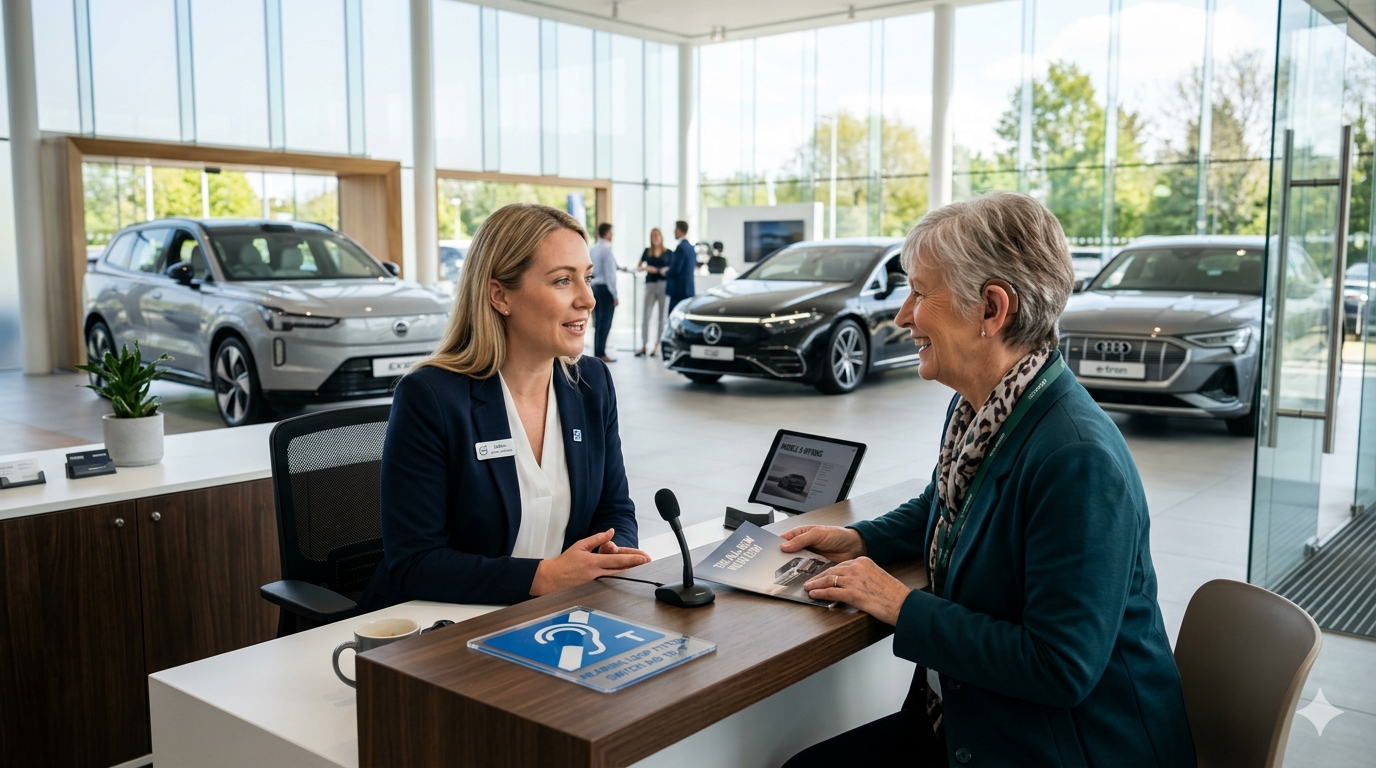
A hearing loop, also known as an induction loop system, is an assistive listening solution designed to transmit clear audio directly to hearing aids and cochlear implants. When installed in a car dealership, it ensures that customers with hearing impairments can Car Dealership with Hearing Loop communicate effectively with sales staff, service advisors, and financial consultants without background noise interference. This creates a more inclusive environment and improves the overall quality of interaction.
As accessibility standards continue to evolve globally, car dealerships that adopt hearing loop systems position themselves as forward-thinking, customer-focused, and socially responsible businesses. In this article, we will explore in depth what a car dealership with hearing loop means, how the system works, why it matters, and how it transforms the customer experience across every stage of the automotive buying journey.
Understanding the Concept of a Car Dealership with Hearing Loop
A car dealership with hearing loop refers to an automotive retail environment equipped with an assistive listening system that directly supports individuals with hearing loss. Unlike traditional audio amplification systems that increase sound volume for everyone in a room, a hearing loop selectively transmits sound to compatible hearing devices, ensuring clarity and privacy.
At its core, the system consists of a microphone, an amplifier, and a loop of wire installed around a specific area such as a sales desk, reception counter, or finance Car Dealership with Hearing Loop office. The audio signal is converted into a magnetic field, which is then picked up by hearing aids switched to the telecoil setting. This allows customers to hear speech with significantly reduced background noise, echo, and distortion.
In a busy car dealership environment, there are often multiple sources of noise, including conversations, ringing phones, vehicle demonstrations, and showroom activity. These distractions can make communication difficult for individuals with hearing challenges. A Car Dealership with Hearing Loop hearing loop eliminates these barriers and ensures that every customer can engage confidently in discussions about vehicle features, pricing, and services.
The adoption of such systems also reflects a dealership’s commitment to inclusivity. It signals that the business recognizes diverse customer needs Car Dealership with Hearing Loop and is willing to invest in technology that enhances accessibility for all visitors.
The Importance of Accessibility in Modern Car Dealerships
Accessibility in car dealerships is no longer an optional enhancement. It has become an essential part of delivering equal service opportunities to all customers. A car dealership with hearing loop technology demonstrates a proactive approach to Car Dealership with Hearing Loop accessibility, ensuring that individuals with hearing loss are not excluded from important conversations or decision-making processes.
For many customers, purchasing a vehicle is a significant financial and emotional decision. It involves understanding technical specifications, negotiating Car Dealership with Hearing Loop pricing, reviewing financing agreements, and discussing after-sales services. If communication is unclear or incomplete, it can lead to confusion, dissatisfaction, or even loss of trust.
By integrating hearing loop systems, dealerships remove one of the most common communication barriers. Customers who rely on hearing aids can participate in conversations with confidence, knowing they will hear every detail clearly. This improves transparency and reduces misunderstandings.
Accessibility also contributes to brand reputation. Dealerships that prioritize inclusive communication are often viewed more favorably by the public. They are Car Dealership with Hearing Loop seen as organizations that value equality and customer care, which can lead to stronger customer loyalty and positive word-of-mouth recommendations.
How Hearing Loop Systems Work in Automotive Retail Environments
Understanding how a hearing loop functions in a car dealership setting helps highlight its practical value. The system is designed to integrate seamlessly into Car Dealership with Hearing Loop customer-facing areas without disrupting the overall aesthetic or workflow of the showroom.
When a customer with a compatible hearing aid enters a hearing loop-equipped area, they simply switch their device to the telecoil setting. Once activated, Car Dealership with Hearing Loop the hearing aid begins receiving audio signals directly from the loop system instead of relying on ambient sound. This direct transmission eliminates much of the background noise commonly found in busy environments.
The microphone used by dealership staff captures speech and sends it to an amplifier. The amplifier then feeds the signal into the loop wire installed around the designated area. This wire generates a magnetic field that corresponds to the original sound. The hearing Car Dealership with Hearing Loop aid picks up this field and converts it back into clear audio.
In a car dealership, this setup is especially useful at service counters, sales desks, and finance consultation rooms. These are areas where detailed conversations take place, often involving complex information. The clarity provided by a hearing loop ensures that customers do not miss important details about warranties, vehicle specifications, or payment plans.
The system operates in real time, meaning there is no delay between speech and audio reception. This makes conversations feel natural and fluid, enhancing the overall customer experience.
Enhancing Customer Experience Through Inclusive Communication
A car dealership with hearing loop technology significantly enhances the customer experience by creating an environment where communication is effortless and stress-free. For customers with hearing loss, the ability to understand conversations clearly can transform their entire perception of the dealership.
When customers feel understood, they are more likely to engage actively in discussions. They ask questions, express preferences, and make informed decisions. This leads to more meaningful interactions between customers and sales staff.
The hearing loop system also reduces the need for repetition. In traditional environments, staff may need to repeat information multiple times or speak louder than usual. This can sometimes create discomfort or frustration on both sides. With a hearing loop, communication becomes smoother and more efficient.
Beyond practical communication benefits, the emotional impact is equally important. Customers who use hearing aids often experience anxiety in public spaces due to fear of misunderstanding or missing critical information. A hearing loop helps alleviate this anxiety by providing consistent audio clarity. This creates a more relaxed and welcoming atmosphere.
Ultimately, better communication leads to better customer satisfaction. When customers leave the dealership feeling confident about their purchase decision, they are more likely to return for future services and recommend the dealership to others.
H2 The Role of Hearing Loops in Sales Effectiveness
From a business perspective, a car dealership with hearing loop systems can also improve sales effectiveness. Clear communication plays a crucial role in guiding customers through the buying process. When customers fully understand the features and benefits of a vehicle, they are more likely to make confident purchasing decisions.
Sales representatives often explain complex details such as engine performance, safety features, financing options, and warranty coverage. If these explanations are not clearly heard, customers may feel uncertain or hesitant. A hearing loop ensures that every word is delivered with clarity, reducing the risk of miscommunication.
Additionally, improved communication builds trust. Customers who feel that a dealership is attentive to their needs are more likely to develop a positive relationship with the brand. Trust is a key factor in high-value purchases such as vehicles, and accessibility tools like hearing loops contribute directly to building that trust.
Dealerships also benefit from smoother negotiation processes. When both parties clearly understand each other, discussions about pricing and trade-ins become more straightforward. This reduces delays and increases the likelihood of successful transactions.
Designing a Hearing Loop Friendly Dealership Environment
Creating a car dealership with hearing loop integration requires thoughtful design and planning. The goal is to ensure that accessibility is seamlessly incorporated into the physical layout of the showroom without disrupting aesthetics or functionality.
The most common approach is to install hearing loop systems at key communication points. These typically include reception desks where customers first arrive, sales consultation areas where product discussions take place, and finance offices where contracts are explained and signed.
Each of these areas requires careful positioning of loop wires to ensure consistent coverage. The design must also consider potential sources of electrical interference, which can affect system performance. Proper installation ensures that the magnetic field remains stable and effective across the designated space.
In addition to technical design, visual communication is also important. Clear signage indicating the presence of a hearing loop system helps customers understand that the facility is accessible. Staff awareness is equally essential, as employees must know how to assist customers in activating and using the system.
When design and implementation are done correctly, the hearing loop becomes a natural part of the dealership environment, enhancing accessibility without drawing unnecessary attention to itself.
Staff Training and Awareness in Hearing Loop Equipped Dealerships
The effectiveness of a car dealership with hearing loop technology depends not only on the system itself but also on the knowledge and behavior of staff members. Proper training ensures that employees can confidently assist customers who rely on hearing aids.
Staff should understand how the hearing loop works, where it is installed, and how to guide customers in using it. This includes recognizing when a customer may benefit from the system and offering assistance proactively.
Communication techniques are also important. Even with a hearing loop in place, staff should maintain clear speech, face customers while speaking, and ensure that instructions are delivered in a structured and understandable manner.
Awareness training also helps build empathy. When employees understand the challenges faced by individuals with hearing loss, they are more likely to provide patient and respectful service. This contributes to a more inclusive workplace culture overall.
A well-trained team ensures that the investment in hearing loop technology delivers maximum benefit. Without staff awareness, even the most advanced system may not be used to its full potential.
Legal Standards and Accessibility Compliance in Automotive Retail
In many regions, accessibility in public service environments is supported or required by law. A car dealership with hearing loop systems often aligns with these legal expectations by providing equal access to communication for individuals with disabilities.
While specific regulations vary by country, the general principle remains consistent. Businesses are expected to make reasonable adjustments to ensure that customers with disabilities are not disadvantaged. Installing assistive listening systems is considered one of the most effective ways to meet this requirement.
Compliance is not only about avoiding legal issues. It is also about demonstrating ethical responsibility. Dealerships that prioritize accessibility show that they value fairness and inclusivity in their operations.
Furthermore, compliance can enhance business opportunities. Many organizations and institutions prefer to work with suppliers and service providers that meet accessibility standards. A dealership that invests in hearing loop technology may therefore gain a competitive advantage in both retail and corporate markets.
The Future of Accessible Car Dealerships
The future of automotive retail is increasingly focused on personalization and inclusivity. A car dealership with hearing loop technology represents just one aspect of a broader movement toward accessible customer experiences.
As technology continues to evolve, hearing loop systems may become integrated with other digital communication tools. This could include hybrid environments where audio assistance is combined with visual displays or mobile applications that enhance understanding.
There is also growing awareness of universal design principles, which aim to create environments usable by all people without the need for adaptation. In this context, hearing loops are an important step toward fully inclusive retail spaces.
Future dealerships may adopt even more advanced acoustic solutions, but the core principle will remain the same. Clear, accessible communication will continue to be a fundamental part of customer service excellence.
Conclusion
A car dealership with hearing loop technology represents a meaningful advancement in accessibility and customer care. It ensures that individuals with hearing loss can fully participate in conversations, make informed decisions, and enjoy a smooth and respectful purchasing experience.
Beyond accessibility, hearing loops contribute to improved communication, stronger customer relationships, and increased sales effectiveness. They also reflect a dealership’s commitment to inclusivity, professionalism, and modern service standards.
As customer expectations continue to evolve, dealerships that invest in accessible communication systems will stand out in a competitive market. They will not only meet legal and ethical responsibilities but also build deeper trust with their customers.
Ultimately, integrating hearing loop technology is not just about improving sound quality. It is about creating an environment where every customer feels valued, understood, and empowered to make confident decisions.