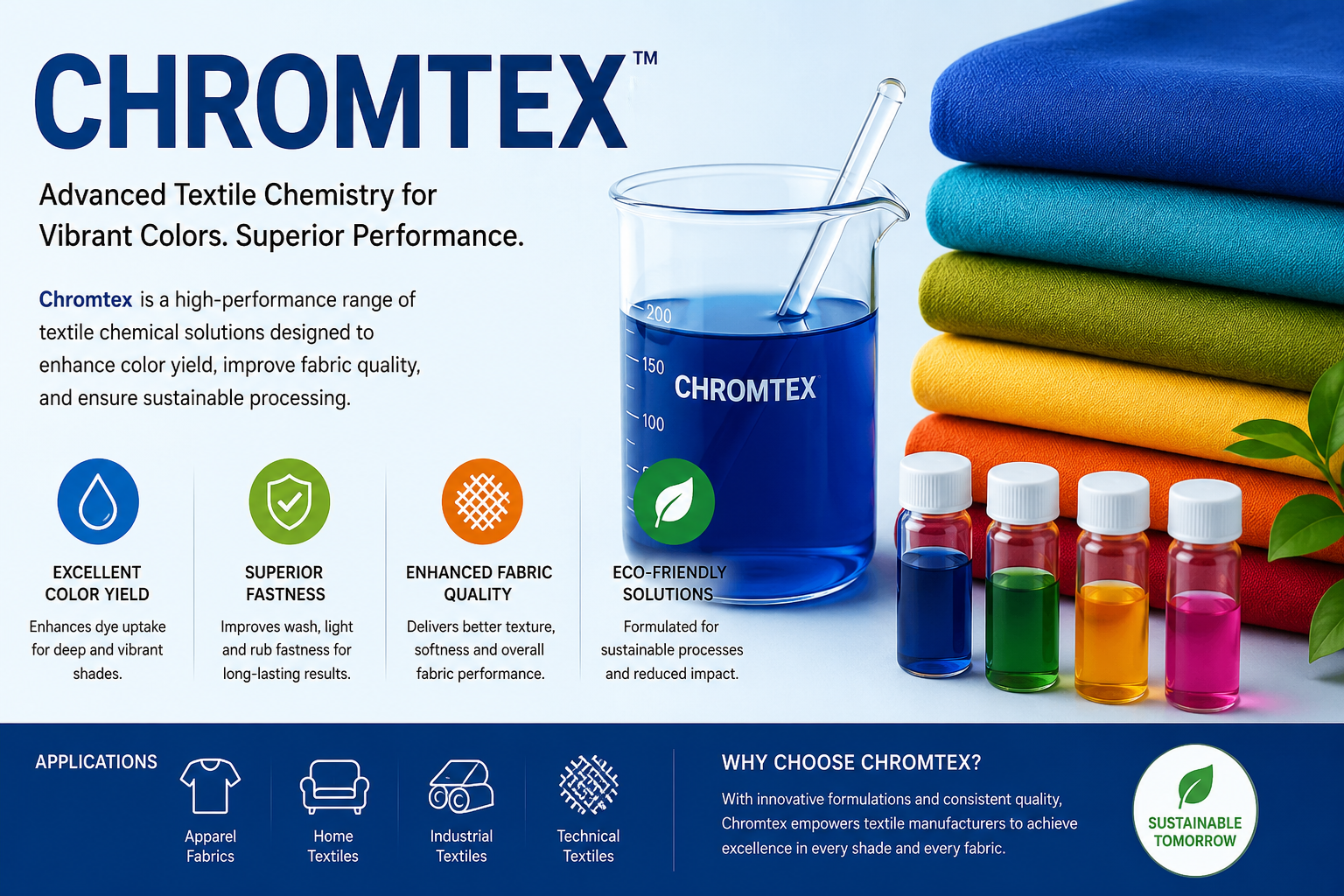
Introduction to Chromtex
In today’s fast-evolving industrial and manufacturing landscape, specialized materials and chemical solutions play a critical role in shaping product quality, durability, and performance. Among the many names that appear in the textile and chemical processing world, Chromtex stands out as a term that is often associated with advanced textile treatments, dyeing technologies, and fabric enhancement solutions. While the exact interpretation of Chromtex can vary depending on context, it is commonly linked to industrial applications that focus on improving color performance, fabric stability, and finishing quality in textile production.
Understanding Chromtex requires more than just a surface-level definition. It involves exploring its potential role in textile chemistry, its relevance in manufacturing workflows, and its broader impact on modern fabric processing systems. As global demand for high-quality textiles continues to grow, solutions like Chromtex are increasingly discussed in relation to innovation, efficiency, and sustainability. This article provides a deep and comprehensive exploration of Chromtex, breaking down its possible meanings, applications, benefits, and future potential in the textile industry.
What is Chromtex?
Chromtex is generally understood as a term associated with textile-related chemical processes or industrial formulations designed to enhance fabric properties. In many contexts, it is linked to dyeing auxiliaries, pigment-based treatments, or specialized finishing agents used in textile manufacturing. These types of solutions are essential in ensuring that fabrics achieve desired characteristics such as color vibrancy, color fastness, texture improvement, and resistance to environmental wear.
The concept of Chromtex can also be interpreted as a brand-like or trade-related term used in the textile chemical sector. In such cases, it may represent a range of products designed to support dye penetration, improve binding efficiency between dyes and fibers, or enhance the overall uniformity of coloration across different fabric types. Whether used in cotton, polyester, blended fabrics, or synthetic fibers, Chromtex-type solutions are typically designed to optimize the interaction between textile materials and coloring agents.
In a broader sense, Chromtex symbolizes the integration of chemistry and textile engineering. It represents how scientific advancements contribute to the creation of more durable, visually appealing, and performance-oriented fabrics. As textile manufacturing becomes increasingly sophisticated, the importance of such specialized solutions continues to grow.
History and Evolution of Chromtex in Textile Applications
The development of textile chemical solutions like Chromtex is closely tied to the evolution of the global textile industry itself. In earlier stages of textile production, natural dyes were the primary source of coloration. These dyes, derived from plants, minerals, and insects, often lacked consistency and durability. Fabrics would fade quickly, and achieving uniform coloration across large batches was difficult.
With the advent of industrialization and the rise of synthetic chemistry, the textile industry underwent a significant transformation. Synthetic dyes and chemical auxiliaries replaced many natural processes, offering improved consistency, scalability, and color fastness. It is within this industrial evolution that products like Chromtex emerged as part of a broader category of textile processing aids.
Over time, the focus shifted from simple coloration to performance enhancement. Textile manufacturers began demanding solutions that not only provided color but also improved fabric strength, softness, and resistance to washing, sunlight, and mechanical wear. Chromtex-like formulations evolved to meet these needs, incorporating advanced chemical compounds designed to interact more effectively with modern synthetic fibers.
In the contemporary textile landscape, Chromtex represents a stage of continued innovation. It reflects the industry’s ongoing effort to balance quality, efficiency, and environmental responsibility. As global supply chains expand and consumer expectations rise, the evolution of such solutions continues to play a key role in maintaining competitiveness and sustainability.
Chromtex in the Textile Industry
Chromtex is most commonly discussed in relation to textile manufacturing, where it plays a role in enhancing the quality and performance of fabrics. The textile industry is highly dependent on chemical processes at nearly every stage of production, from raw fiber treatment to final finishing. Within this framework, Chromtex-type solutions contribute significantly to achieving consistent and high-quality results.
Role in Fabric Processing
In fabric processing, achieving uniformity and consistency is one of the most critical objectives. Fabrics must not only look visually appealing but also maintain their properties after repeated use and washing. Chromtex-related solutions are typically used during processing stages to ensure that fibers are properly prepared for dye absorption and finishing treatments.
These solutions may help in modifying the surface characteristics of fibers, allowing dyes to penetrate more effectively. This improves the depth and richness of color while reducing patchiness or uneven distribution. In addition, they may assist in stabilizing fiber structures, which helps prevent shrinkage, distortion, or weakening during subsequent processing steps.
The role of Chromtex in fabric processing is therefore closely tied to quality control. By ensuring that each batch of fabric meets consistent standards, manufacturers can reduce waste, improve efficiency, and deliver better products to the market.
Dyeing and Finishing Applications
One of the most important applications associated with Chromtex is in dyeing and finishing processes. Dyeing is a complex chemical interaction between dyes and textile fibers, and achieving the desired shade requires precise control over multiple variables such as temperature, pH levels, and chemical concentration.
Chromtex-type agents are often used to support these processes by enhancing dye affinity and improving fixation rates. This means that dyes adhere more effectively to the fibers, resulting in longer-lasting and more vibrant colors. In many cases, such solutions also help reduce the amount of dye required, making the process more efficient and environmentally friendly.
In finishing applications, Chromtex-related formulations may contribute to improving fabric texture, softness, and resistance properties. Finished textiles must meet specific performance criteria depending on their end use, whether in fashion, home textiles, or industrial applications. Enhancing these properties ensures that the final product is both functional and aesthetically pleasing.
Manufacturing and Chemical Processes Behind Chromtex
The manufacturing processes associated with Chromtex-type solutions are rooted in advanced chemical engineering and material science. Textile auxiliaries are typically developed through a combination of organic chemistry, polymer science, and surface chemistry. These disciplines work together to create compounds that can interact effectively with natural and synthetic fibers.
In many cases, Chromtex formulations may include surfactants, binding agents, dispersing agents, and stabilizers. Each component serves a specific function within the overall system. Surfactants help improve wetting properties, allowing chemicals to spread evenly across fabric surfaces. Binding agents enhance the attachment of dyes to fibers, while dispersing agents ensure uniform distribution of pigments or colorants.
The production of such chemical solutions requires strict quality control measures. Even small variations in chemical composition can significantly impact performance. As a result, manufacturing facilities often operate under highly controlled conditions, with continuous testing and refinement to ensure consistency.
Another important aspect of the manufacturing process is customization. Different textile materials require different chemical treatments. For example, cotton behaves differently from polyester or nylon when exposed to dyeing chemicals. Chromtex-type solutions are therefore often tailored to specific fiber types, ensuring optimal performance across a wide range of applications.
Benefits of Chromtex in Textile Processing
The use of Chromtex-related solutions in textile manufacturing offers a wide range of benefits that contribute to both product quality and operational efficiency. One of the most significant advantages is improved color performance. Fabrics treated with such solutions typically exhibit richer, more uniform colors that remain stable over time.
Another key benefit is enhanced durability. By improving the bonding between dyes and fibers, Chromtex-type formulations help reduce fading caused by washing, sunlight exposure, and friction. This extends the lifespan of textile products and increases customer satisfaction.
Efficiency is also a major advantage. When dyes and chemicals are used more effectively, manufacturers can reduce material waste and lower production costs. This not only improves profitability but also supports more sustainable production practices.
Additionally, Chromtex solutions can contribute to improved fabric feel and texture. Depending on the formulation, they may enhance softness, reduce stiffness, or improve elasticity. These qualities are particularly important in fashion and apparel industries, where consumer comfort is a key consideration.
Challenges and Considerations in Using Chromtex
Despite its advantages, the use of Chromtex-type solutions is not without challenges. One of the primary concerns in the textile chemical industry is environmental impact. Chemical processing can generate wastewater and byproducts that require careful management to prevent environmental damage. As regulations become stricter, manufacturers must ensure that their processes comply with sustainability standards.
Another challenge is compatibility. Not all chemical formulations work equally well with every type of fiber or dye. Incorrect usage can lead to uneven coloration, fabric damage, or reduced performance. This makes technical expertise essential in selecting and applying the right solutions.
Cost can also be a factor. High-quality chemical auxiliaries may increase production expenses, particularly for small or medium-sized manufacturers. Balancing cost efficiency with product quality is therefore an ongoing consideration in the industry.
Finally, technological complexity can present barriers. As formulations become more advanced, they require specialized knowledge to use effectively. This necessitates continuous training and development within textile production teams.
Innovations and Modern Trends Related to Chromtex
The textile industry is currently undergoing a period of rapid innovation, and Chromtex-related solutions are evolving alongside it. One of the most important trends is the shift toward eco-friendly chemistry. Manufacturers are increasingly developing biodegradable and low-impact chemical formulations that reduce environmental harm while maintaining performance standards.
Another major trend is digitalization and process automation. Modern textile plants use advanced monitoring systems to control dyeing and finishing processes with high precision. This allows for more efficient use of chemical solutions and reduces the likelihood of errors.
Nanotechnology is also playing a growing role in textile chemistry. By manipulating materials at the molecular level, researchers are developing coatings and treatments that offer enhanced durability, water resistance, and color stability. Chromtex-type formulations may increasingly incorporate such technologies to improve performance.
Customization is another key innovation. Instead of one-size-fits-all solutions, manufacturers are moving toward highly tailored chemical systems designed for specific applications. This allows for greater flexibility and improved results across different textile categories.
Sustainability and Environmental Impact
Sustainability has become a central focus in the textile industry, and chemical solutions like Chromtex are no exception. Traditional dyeing and finishing processes are often resource-intensive, requiring significant amounts of water and energy. They may also produce waste that must be carefully treated.
In response to these challenges, modern Chromtex-type solutions are increasingly designed with environmental considerations in mind. This includes reducing water usage, lowering energy consumption, and minimizing harmful emissions. Some formulations are developed to be more easily biodegradable, reducing their long-term environmental footprint.
Sustainable textile chemistry also involves improving process efficiency. By enhancing dye uptake and reducing chemical waste, manufacturers can achieve the same results with fewer resources. This not only benefits the environment but also supports cost-effective production.
The move toward sustainability is expected to continue shaping the development of Chromtex-related technologies in the future. As global awareness of environmental issues grows, demand for greener solutions will likely increase.
Future Outlook of Chromtex in the Textile Industry
The future of Chromtex in the textile industry appears closely tied to ongoing advancements in chemistry, technology, and sustainability. As consumer demand for high-quality, durable, and environmentally responsible textiles continues to rise, the role of advanced chemical solutions will become even more important.
In the coming years, we can expect to see further integration of smart technologies into textile processing. This may include real-time monitoring of chemical reactions, automated adjustments to dyeing conditions, and predictive systems that optimize resource usage. Chromtex-type solutions will likely evolve to become more adaptive and efficient in such environments.
Sustainability will remain a driving force. Future formulations are expected to be even more eco-friendly, with reduced reliance on harmful chemicals and greater emphasis on renewable resources. This shift will help the textile industry align with global environmental goals while maintaining high production standards.
Additionally, innovation in material science may open new possibilities for Chromtex applications. As new synthetic and hybrid fibers are developed, chemical solutions will need to adapt accordingly. This ongoing evolution ensures that Chromtex will remain relevant in a constantly changing industrial landscape.
Conclusion
Chromtex represents an important concept within the textile and chemical processing industry, symbolizing the intersection of science, technology, and manufacturing innovation. Whether viewed as a product category, a chemical solution, or a broader industrial term, it is closely associated with improving fabric quality, enhancing dye performance, and supporting efficient textile production processes.
From its role in fabric processing and dyeing to its contributions to sustainability and innovation, Chromtex reflects the continuous advancement of modern textile chemistry. While challenges such as environmental impact and technical complexity remain, ongoing research and development are driving significant improvements in this field.
As the textile industry continues to evolve, solutions like Chromtex will play a vital role in shaping the future of fabric production. By combining performance, efficiency, and sustainability, they help meet the growing demands of both manufacturers and consumers in an increasingly competitive global market.